
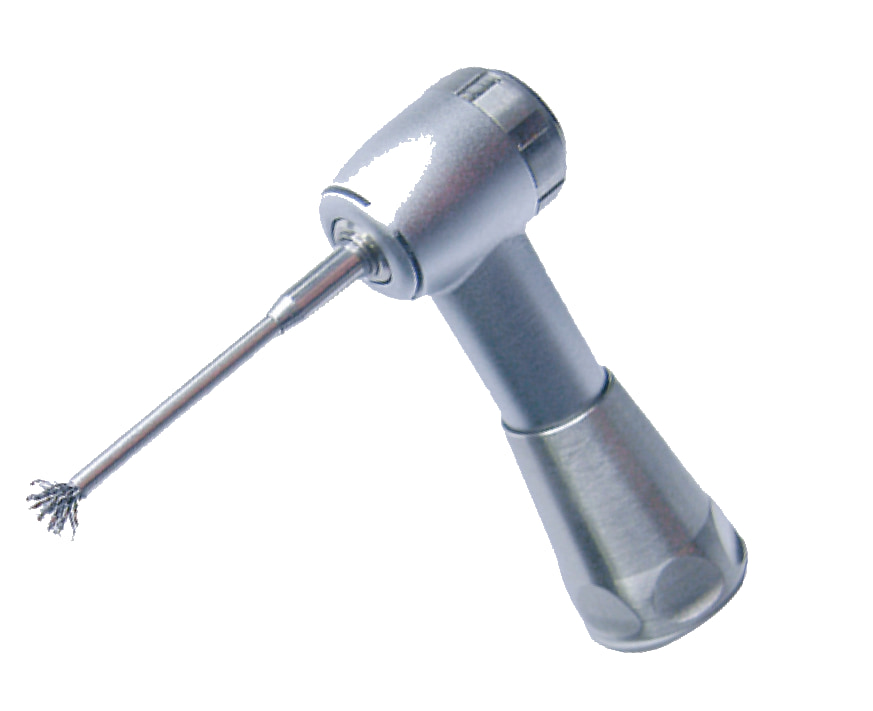
NiTi Brush POCKET
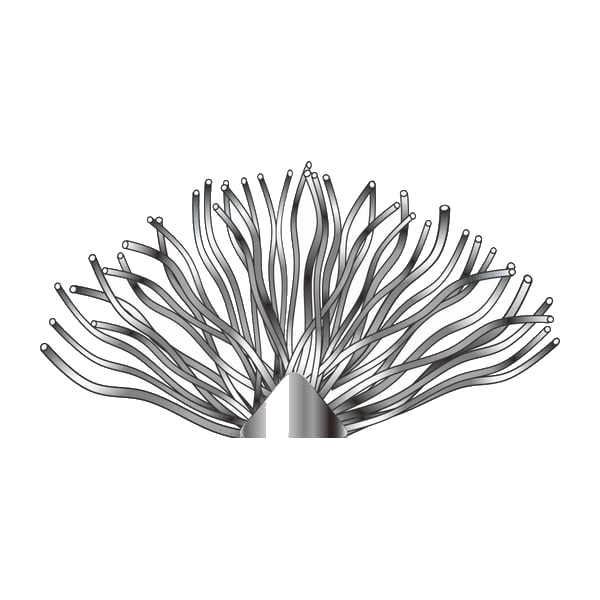
The regular brush for the normal presentation of peri-implantitis. Open bristle head with effective access into the pocket.
- Typical use
- Routine peri-implantitis cases
Every NiTi Brush uses the same shape-memory nickel-titanium bristle that returns a contaminated implant surface to a machined finish. What changes between models is access — how deep the pocket is, how much thread is exposed, and how much room the operator has.
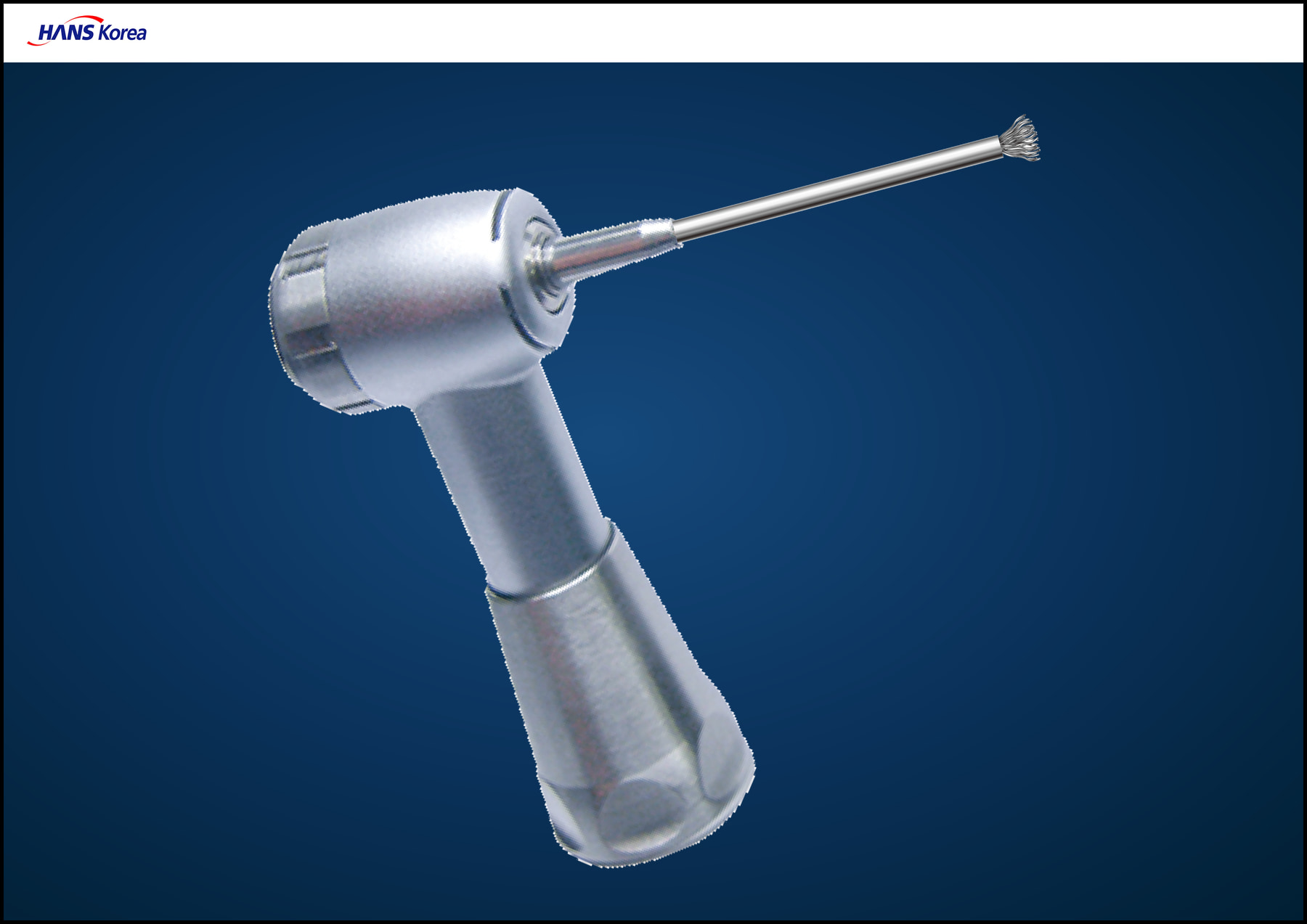
Select the model by the access you need at the defect. Every model is driven by an implant motor through a 20:1 reduction handpiece, and is supplied non-sterile for single use.
The regular brush for the normal presentation of peri-implantitis. Open bristle head with effective access into the pocket.
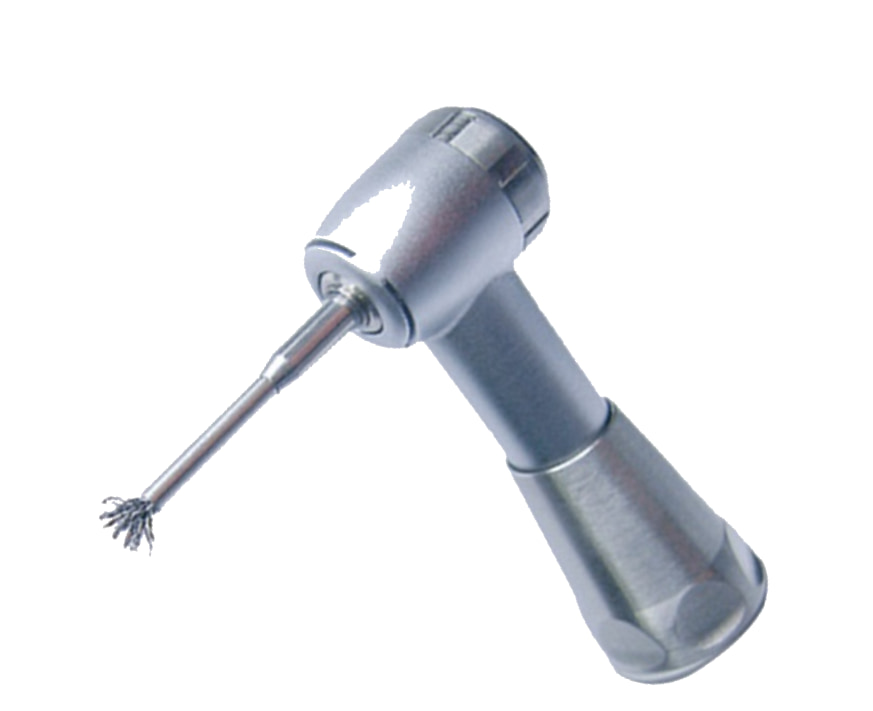
The same bristle head and the same debridement performance as POCKET, on a shortened shaft. Recommended where the posterior region is narrow, or where the patient cannot open wide enough for the full-length instrument.
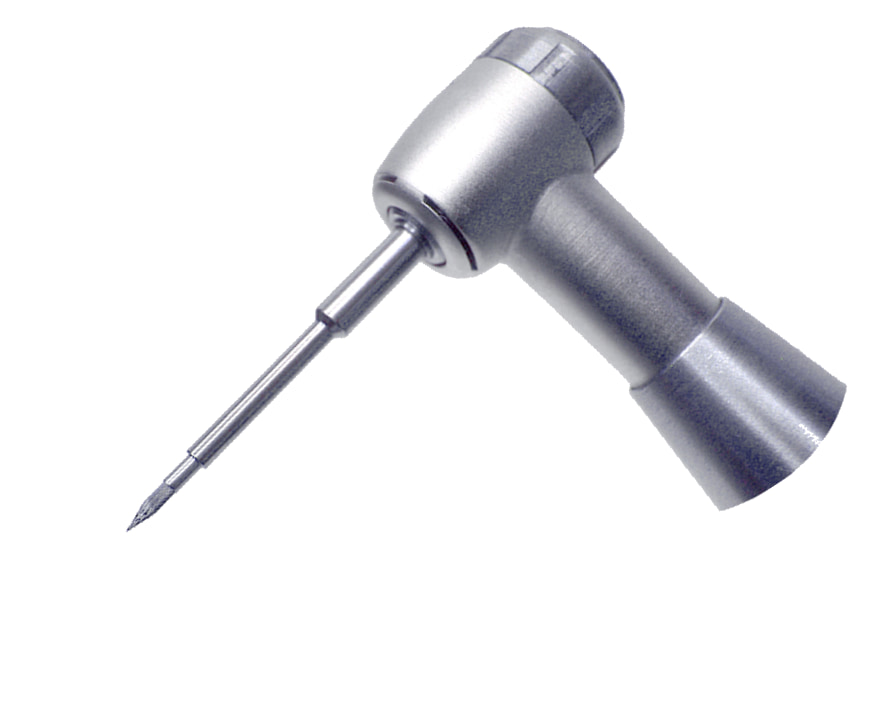
The finest tip in the range. A tightly bound bristle point for very targeted, precise work where almost no space is available.
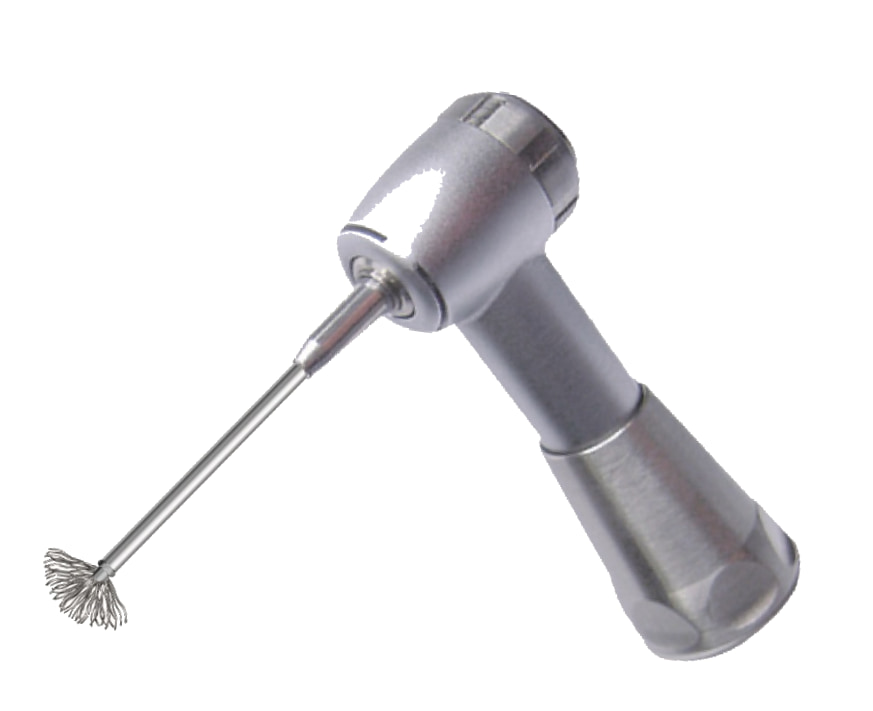
A wide, splayed bristle head that folds around the thread. Best access to every area, even if the space is limited.
The defect decides the brush. The table below is the practical selection guide used in the NiTi Brush protocol.
| POCKET SHORT | NANO | OMEGA | ||
|---|---|---|---|---|
| Bristle head | Open | Open | Pointed, bound | Wide, splayed |
| Thread exposure | 2–3 threads open | 2–3 threads open | One thread open | Deep pocket |
| Debridement performance | Standard | Same as POCKET | Precision | Maximum coverage |
| Stage | Established | Established | Initial | Advanced |
| Choose it when | Access is normal | Posterior site is narrow, or the patient cannot open wide | Access is minimal | The defect is deep |
| Drive | Implant motor | Implant motor | Implant motor | Implant motor |
| Handpiece | 20:1 | 20:1 | 20:1 | 20:1 |
| Speed | 600–1,200 rpm | 600–1,200 rpm | 600–1,200 rpm | 600–1,200 rpm |
Ni-Ti is roughly three times more flexible than titanium at a comparable hardness. The bristle bends into the thread rather than cutting across it, so the contaminated layer is removed while the implant geometry is preserved. In an in vitro comparison of decontamination methods, none of the protocols tested compromised the cytocompatibility of the titanium surface, and the best cell-viability results were recorded in the nickel-titanium brush group.1
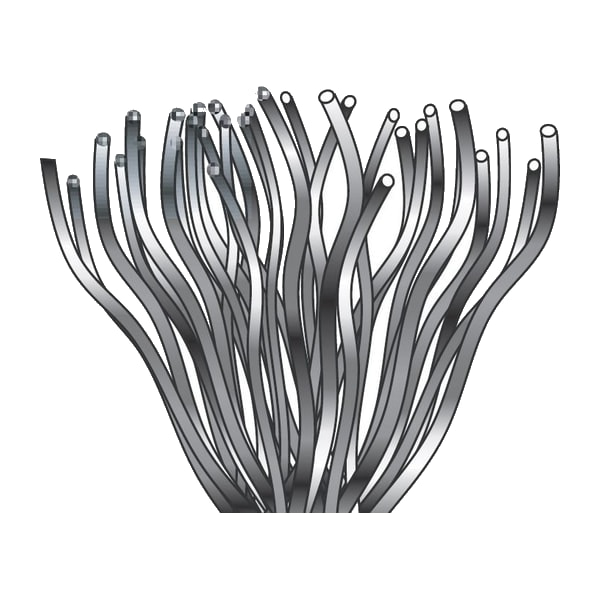
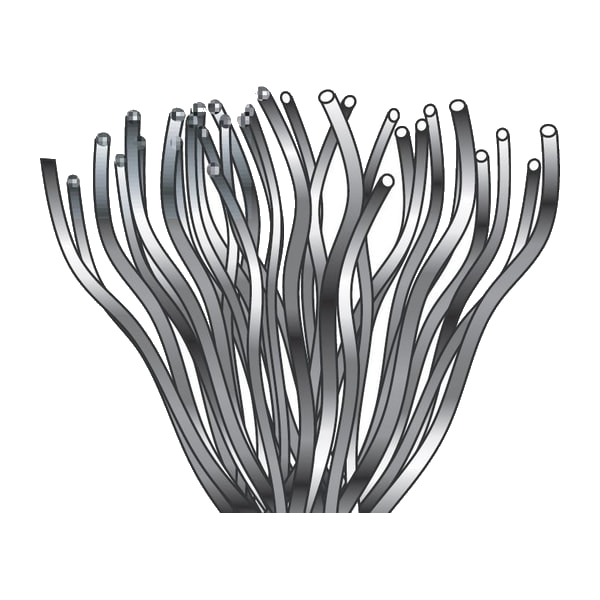
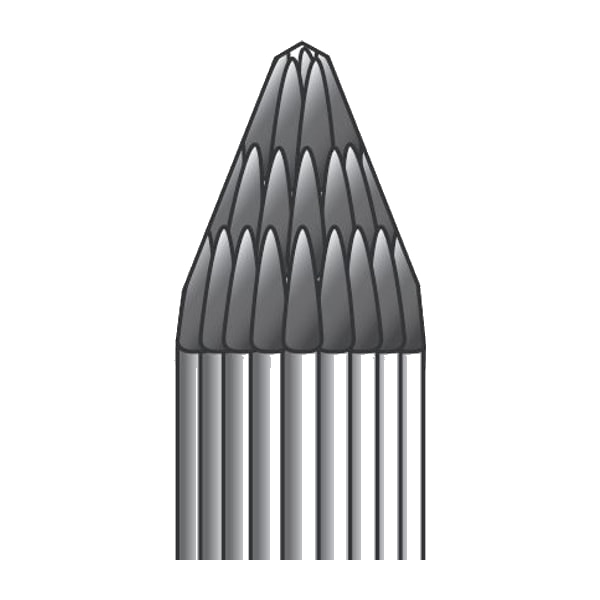
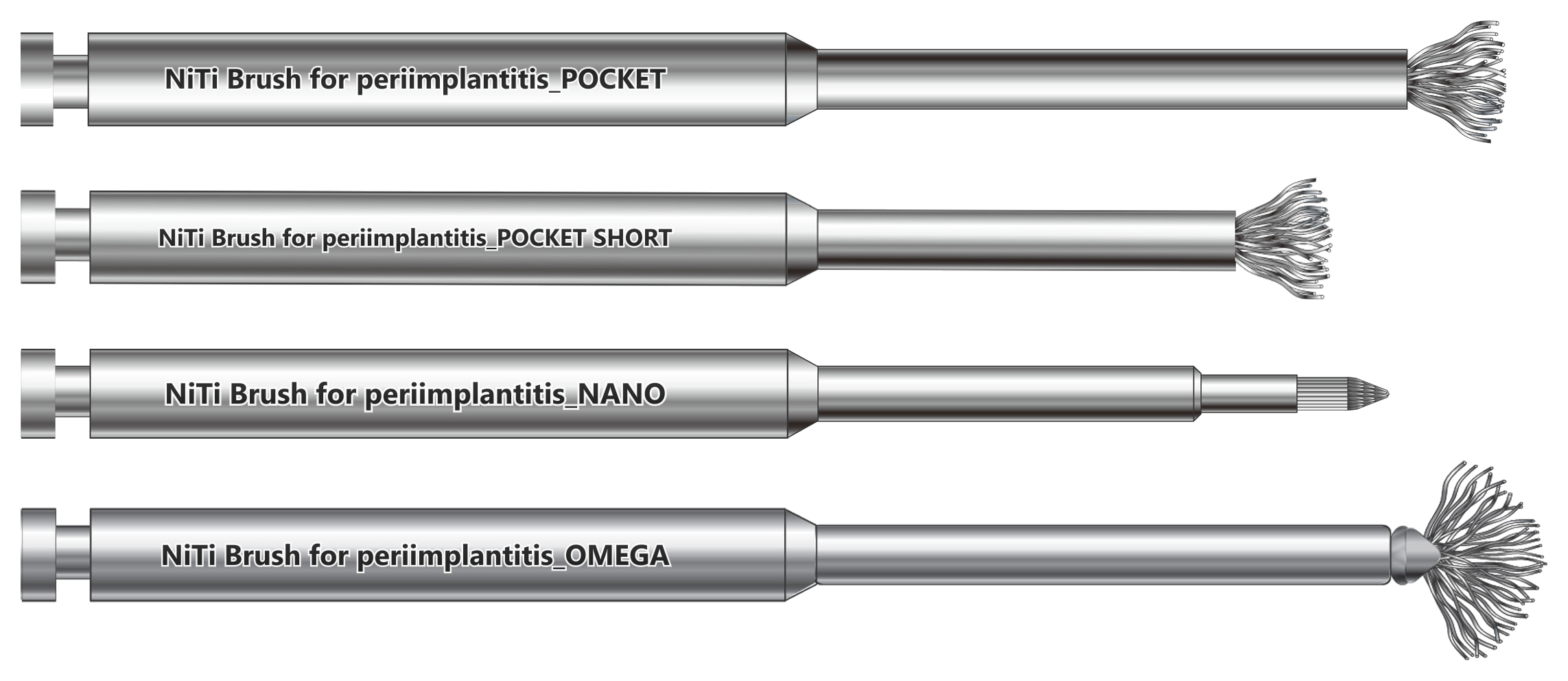
Every model uses the same Ni-Ti bristle and the same 20:1 implant-motor drive. What changes is the head geometry and, for POCKET SHORT, the working length.
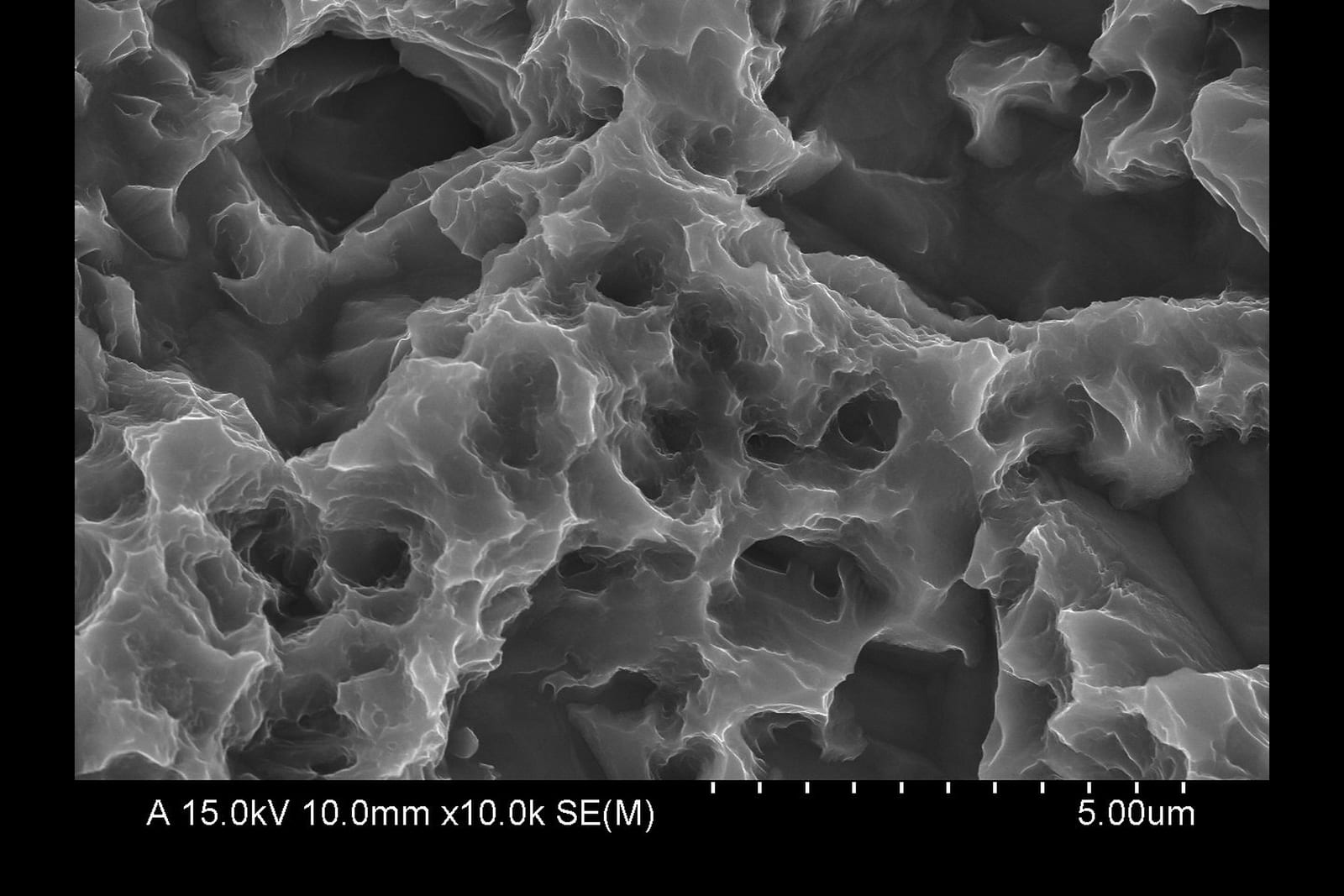
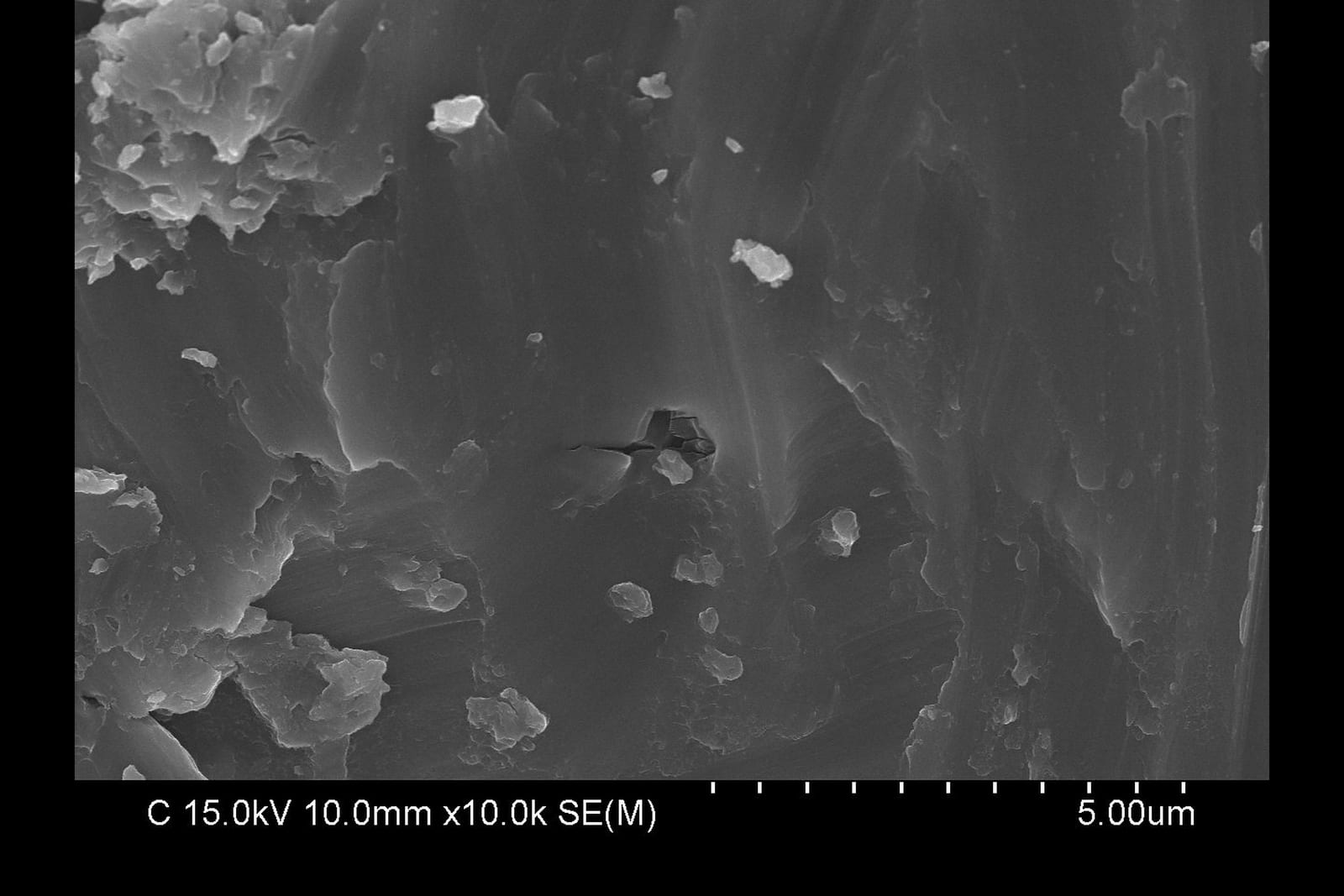
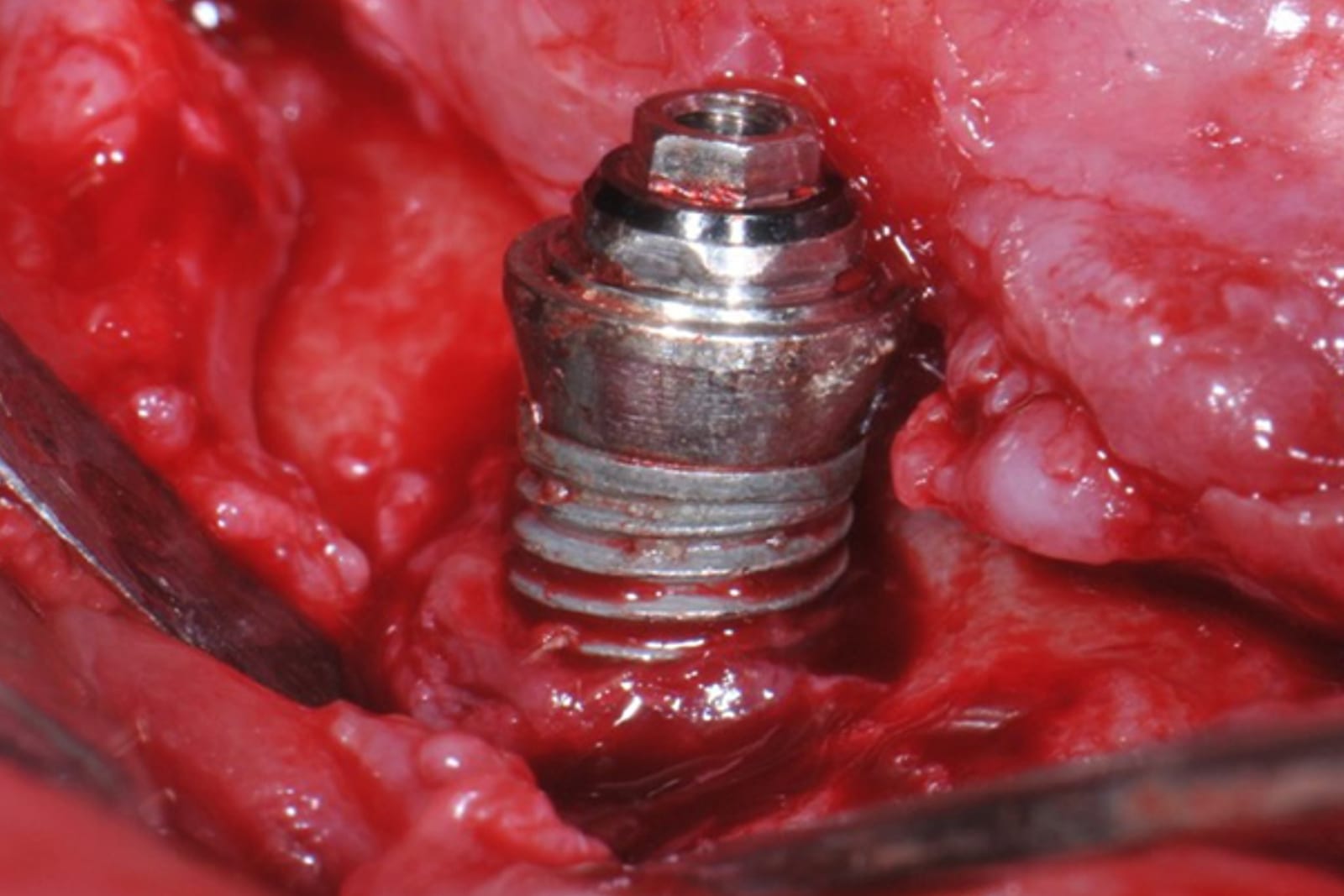
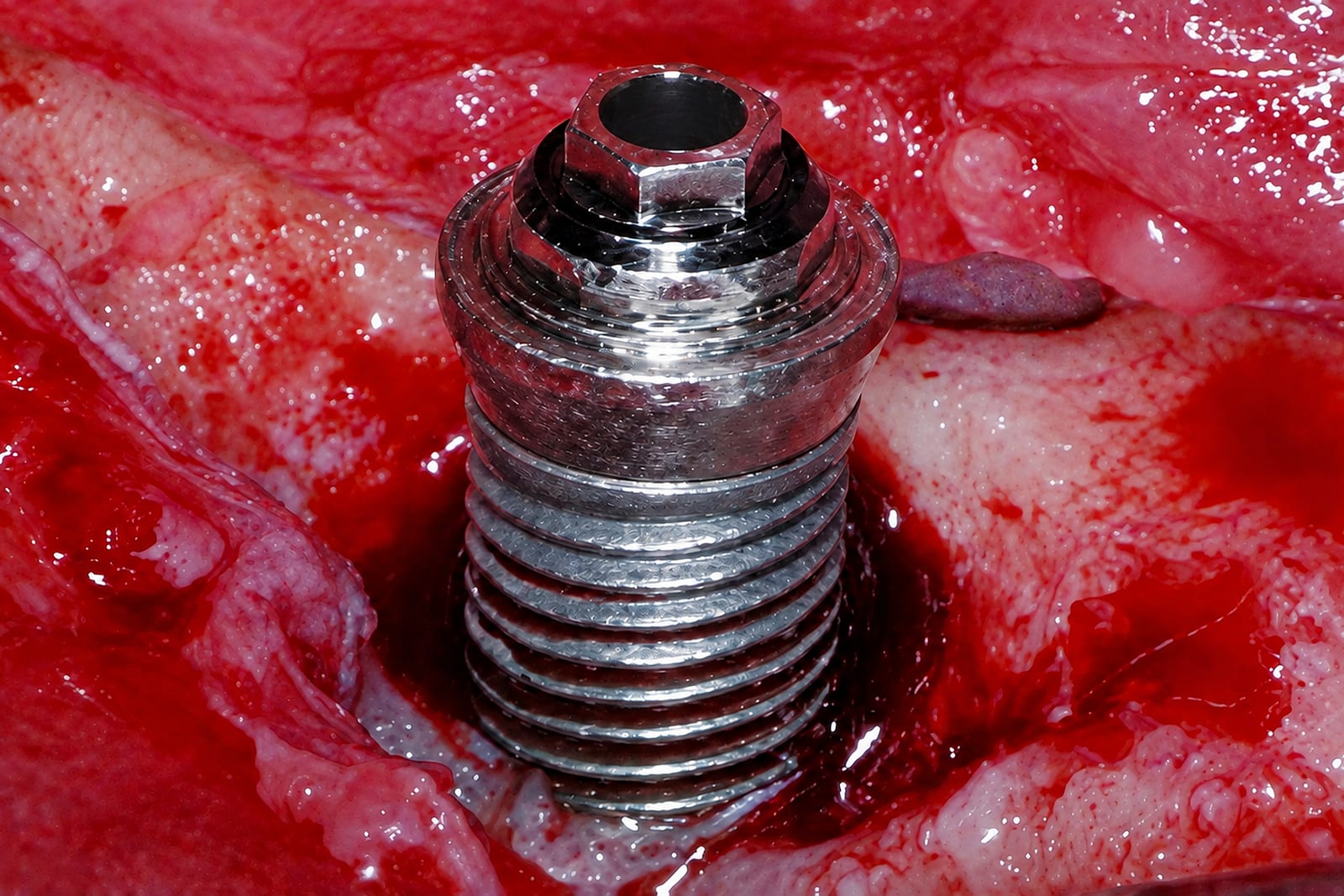
Make rough surface into machined smooth surface. Remove everything except the original shape of the implant. The instrument is used as the mechanical decontamination step in published randomised controlled trials of peri-implantitis therapy.2
NiTi Brush for peri-implantitis is intended for mechanical debridement and cleaning of the titanium dental implant surface contaminated by osseous defect of plaque, calculus or any other foreign body materials resulting from peri-implantitis. NiTi Brush for peri-implantitis is designed for use in the dental office by dentists, dental hygienists and trained dental assistants.
| Indication | Peri-implantitis |
|---|---|
| Applicable surface | All titanium dental implants |
| Patient population | Adults with dental implants |
| Intended operator | Dentists, dental hygienists and trained dental assistants |
| Operating room temperature | 15–30 °C |
| Storage | 15–30 °C, 1–75 % humidity, away from sunlight |
| Shelf life | 5 years from the date of manufacture |
| Supplied | Non-sterile, single use |
The NiTi Brush must be run from an implant motor through a 20:1 reduction handpiece at 600–1,200 rpm, with continuous external sterile saline irrigation. It is not intended for a high-speed turbine or any drive that cannot maintain this speed range.
Supplied non-sterile. Sterilise using a sterile pouch and autoclave at 134 °C for 15 minutes before every use.
Where one brush is used on several implants in the same patient, immerse it in 3 % hydrogen peroxide and rinse with sterile saline before moving to the next implant.
Each brush is for single-patient, single-procedure use. For full instructions, refer to the Instructions for Use for your market.
 Non-sterile — sterilise before use
 Do not re-use — single patient, single procedure
Summarised from the Instructions for Use (HK IFU-001, Rev. 7). This summary does not replace the IFU — always read the Instructions for Use applicable to your market before treatment.
Redness, discomfort and swelling.
| Sterilisation — autoclave | |
|---|---|
| Configuration | Wrapped (sterilisation pouch) |
| Temperature | 134 °C |
| Pressure | 2.5 bar |
| Exposure time | 15 minutes |
| Dry time | 20 minutes |
Full list on the Clinical evidence page. HANS Korea is not the publisher of these works and has no commercial relationship with them.
#periimplantitis #niti brush #Titanium brush #Titanium brush for peri-implantitis #niti brush for peri-implantitis #R brush #I brush #Rotating titanium brush #peri brush