
NiTi Brush for peri-implantitis example of protocol
The sequence below is an example of how the NiTi Brush is used in surgical peri-implantitis therapy, as practised by experienced clinicians. It is published by HANS Korea for orientation and is not a substitute for the Instructions for Use. Treatment decisions remain with the treating clinician.
-
Diagnosis
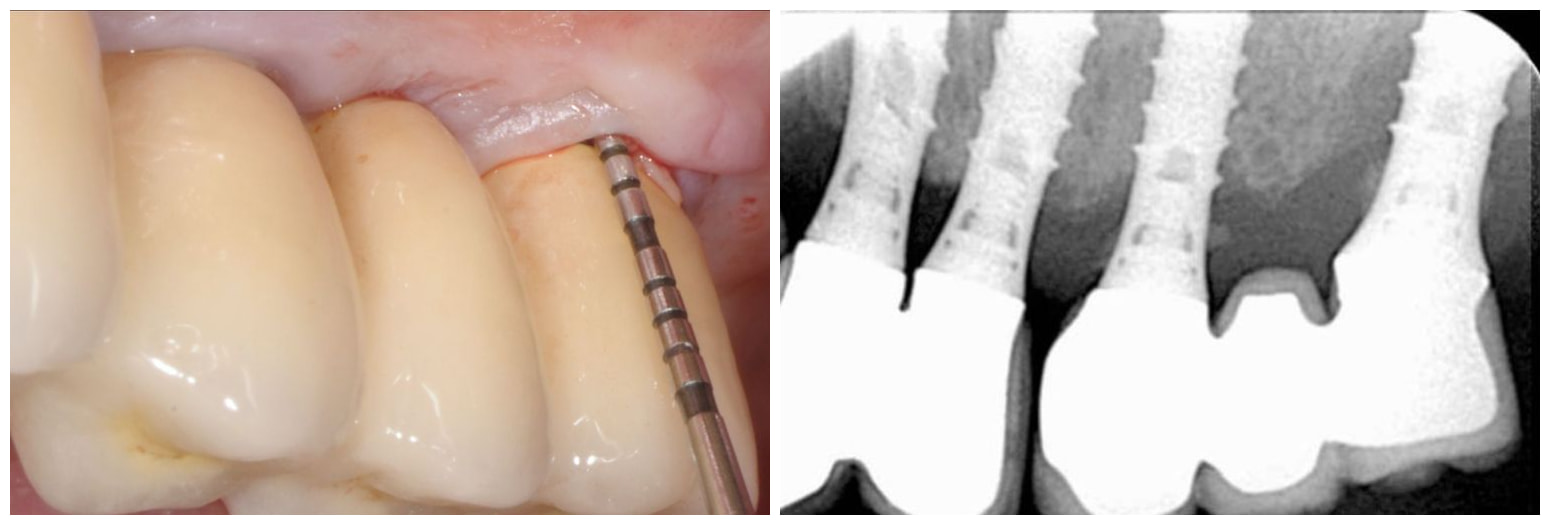
Diagnose peri-implantitis and measure the depth of the pocket.
-
Select the brush for the case
- NANO — for 1 to 2 thread(s) exposure
- POCKET — for more than 2 threads exposure
- POCKET SHORT — for molars
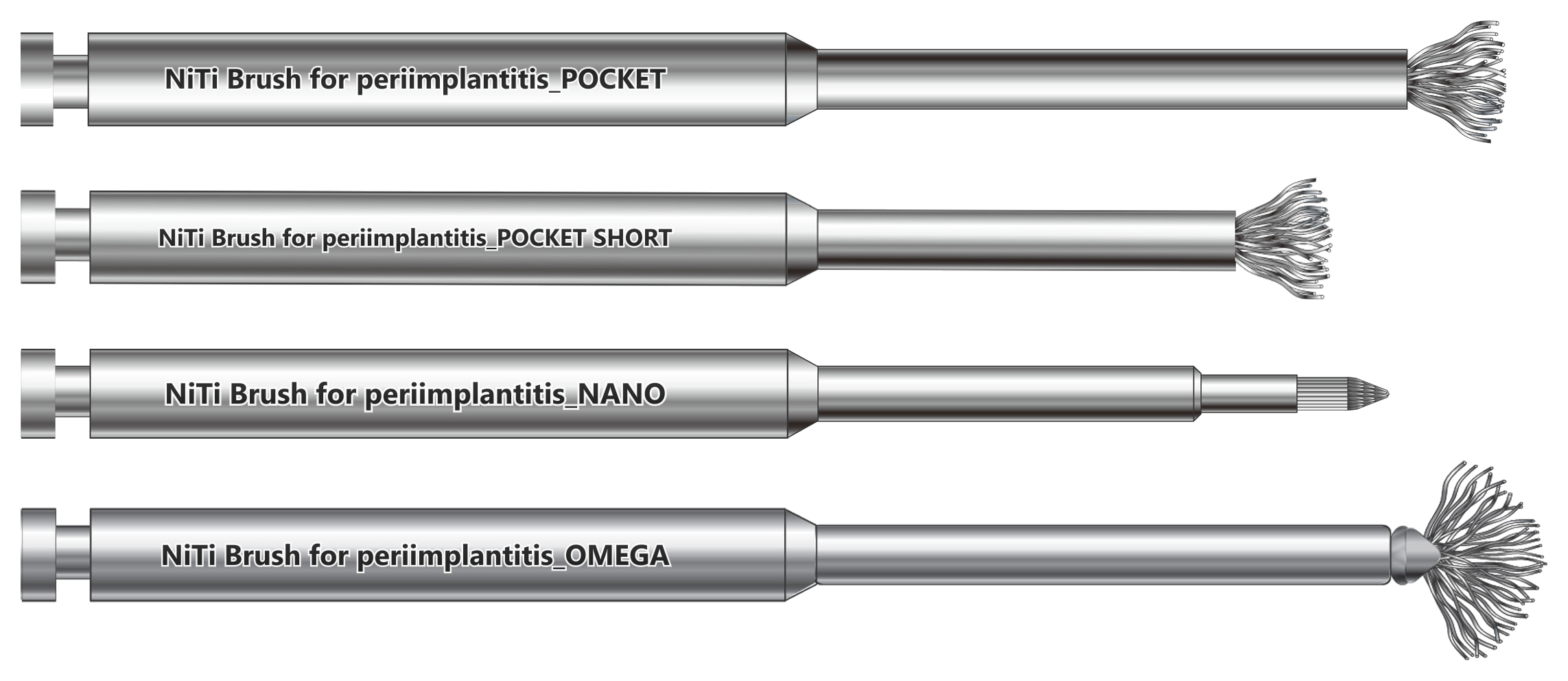
Technical illustrations. The appearance of the delivered product may differ.
-
Sterilise before use
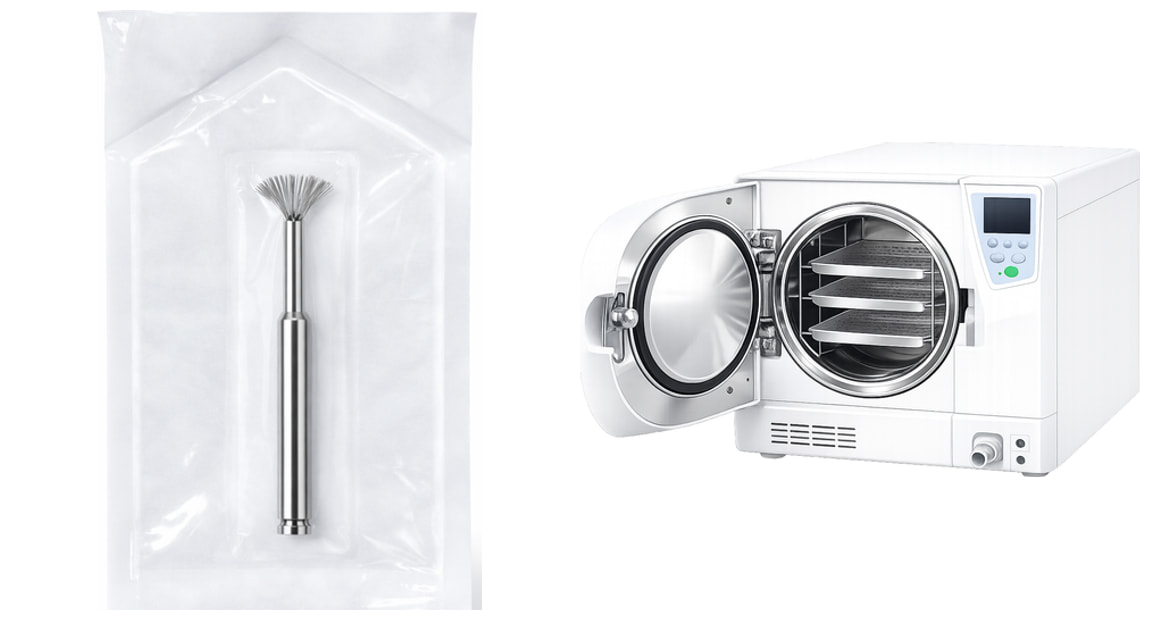
- The NiTi Brush is supplied non-sterile — sterilise before every use
- Use a sterile pouch and autoclave
- 134 °C for 15 minutes
-
Rotate the NiTi Brush — polishing the surface
Debridement & decontamination.
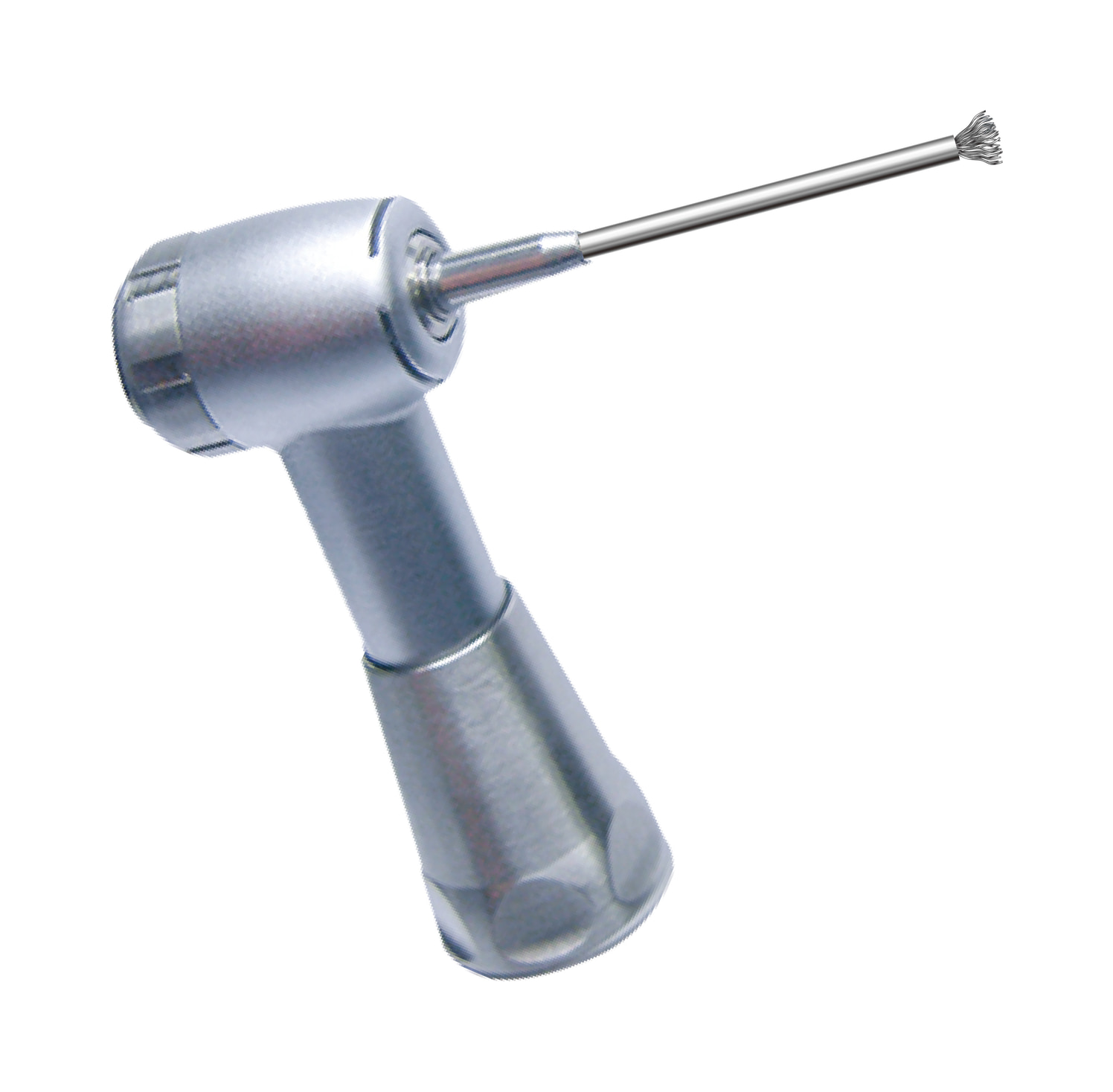
- Use an implant motor
- Rotating speed 600–1,200 rpm
- Extensive external saline irrigation during brushing
- Make the rough surface into a machined, smooth surface
- Treat the implant surface and the surrounding tissue at the same time — no more curetting
Brushing time
- Premium-brand implants: 30–40 seconds
- Other brands: 1–3 minutes or so
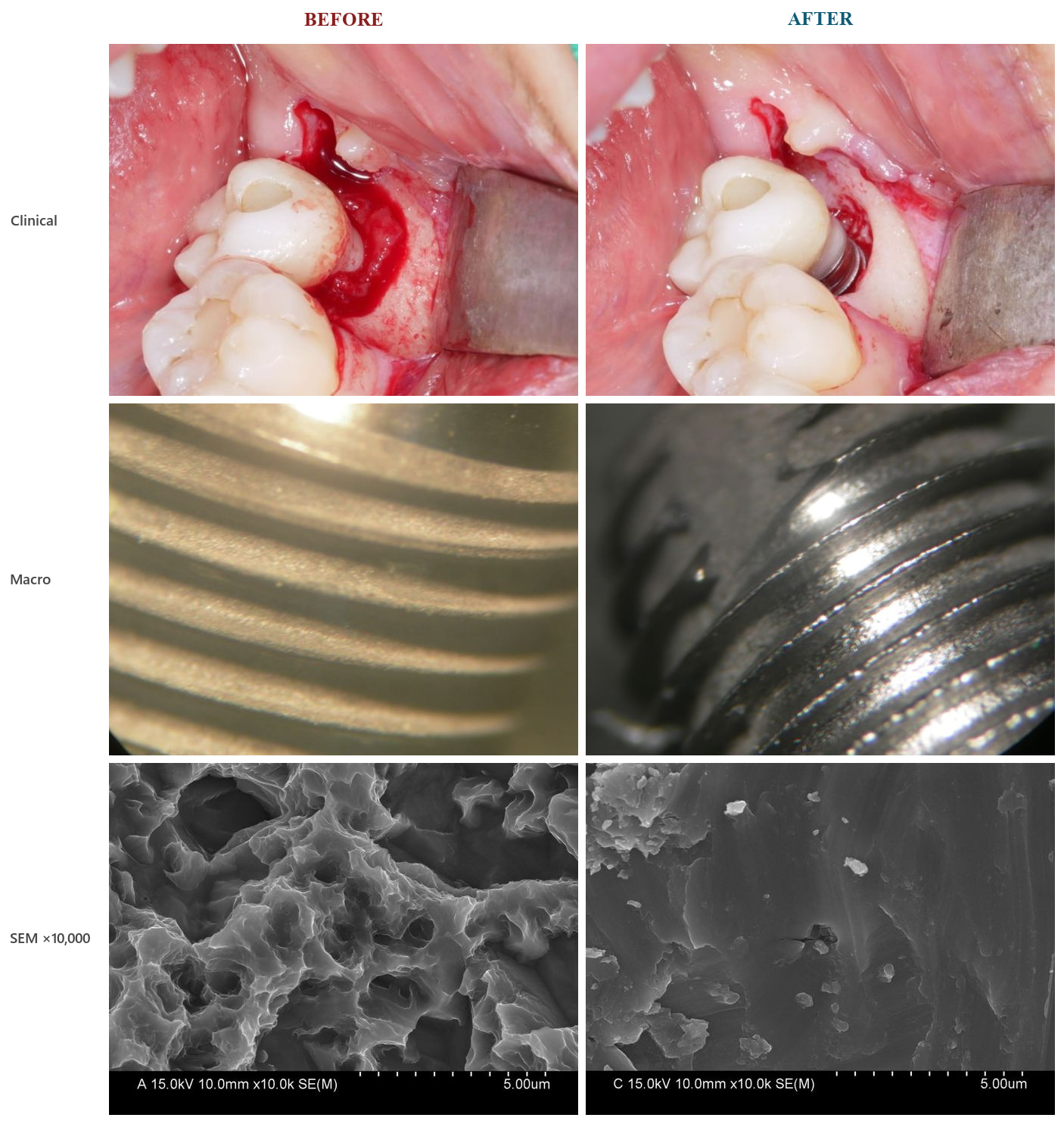
Before (left) and after (right) — clinical, macro and SEM
-
Chemical treatment — after brushing
- Open a tetracycline 250 mg capsule
- Place the tetracycline 250 mg in 2.5 cc warm water (saline)
- Using a syringe, sprinkle it onto the brushed surface and tissue
- Wait 3 minutes, then wash the tetracycline away with saline
- Another chemical treatment is an alternative choice (for example minocycline)
The agent and the protocol are a clinical decision. Please refer to the published literature rather than treating this example as a recommendation.
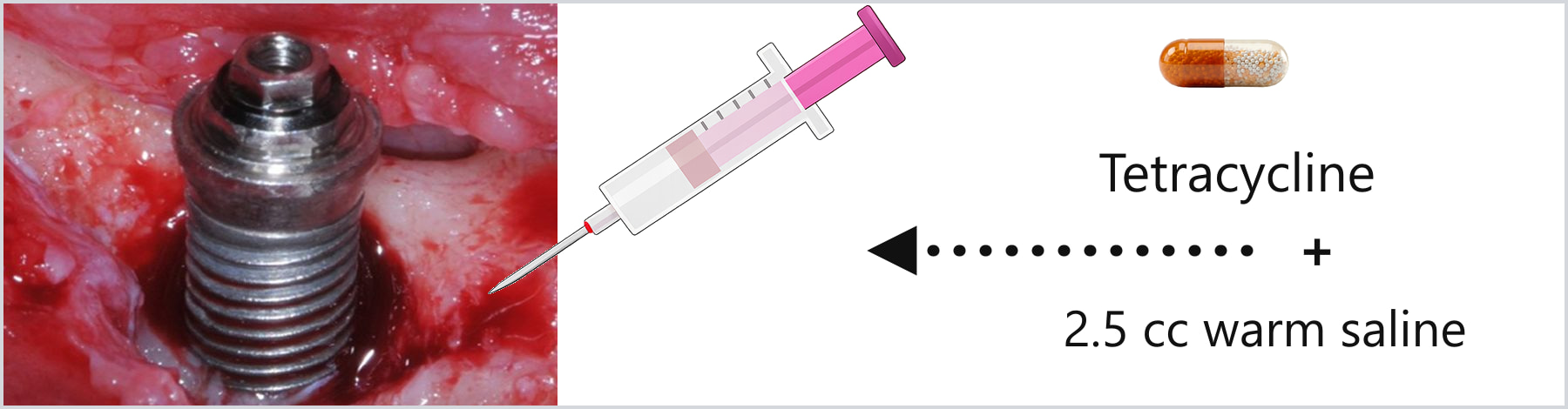
-
GBR — after chemical treatment
Guided bone regeneration follows the decontamination and chemical steps. Refer to the references and literature for the reconstructive protocol.
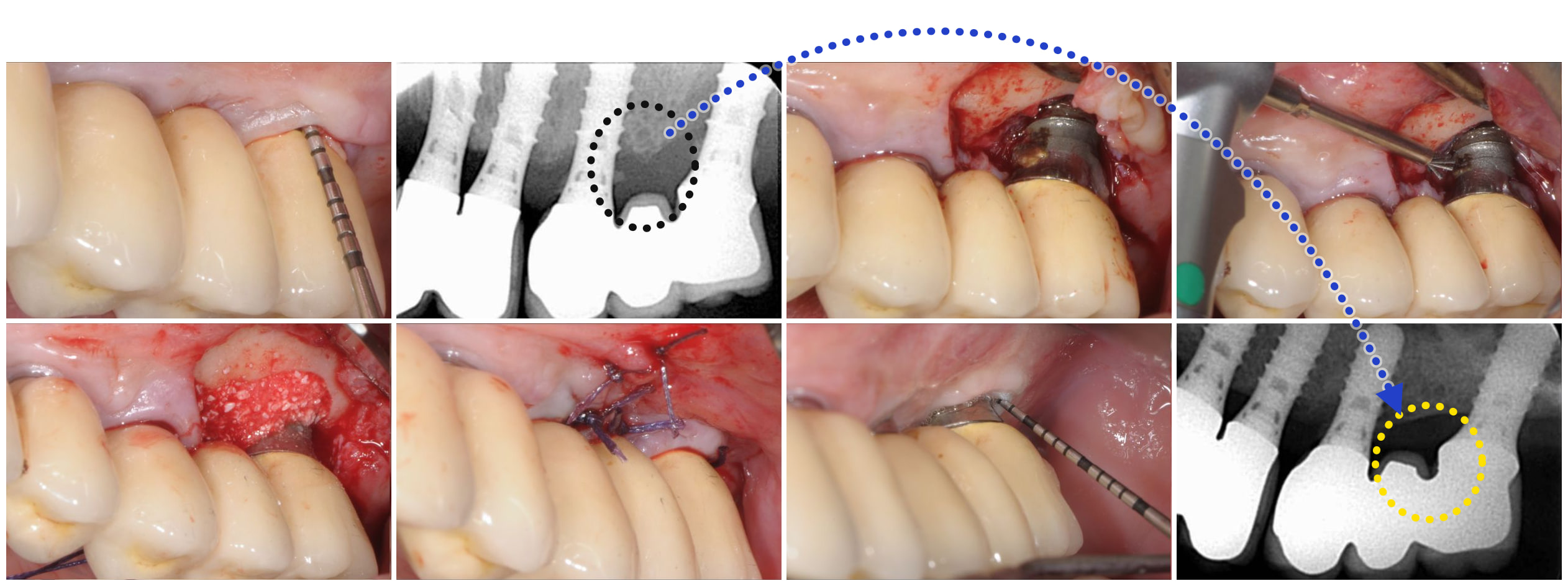
One case from start to finish — diagnosis, debridement, graft and suture (top row), then the healed result at follow-up (bottom row)
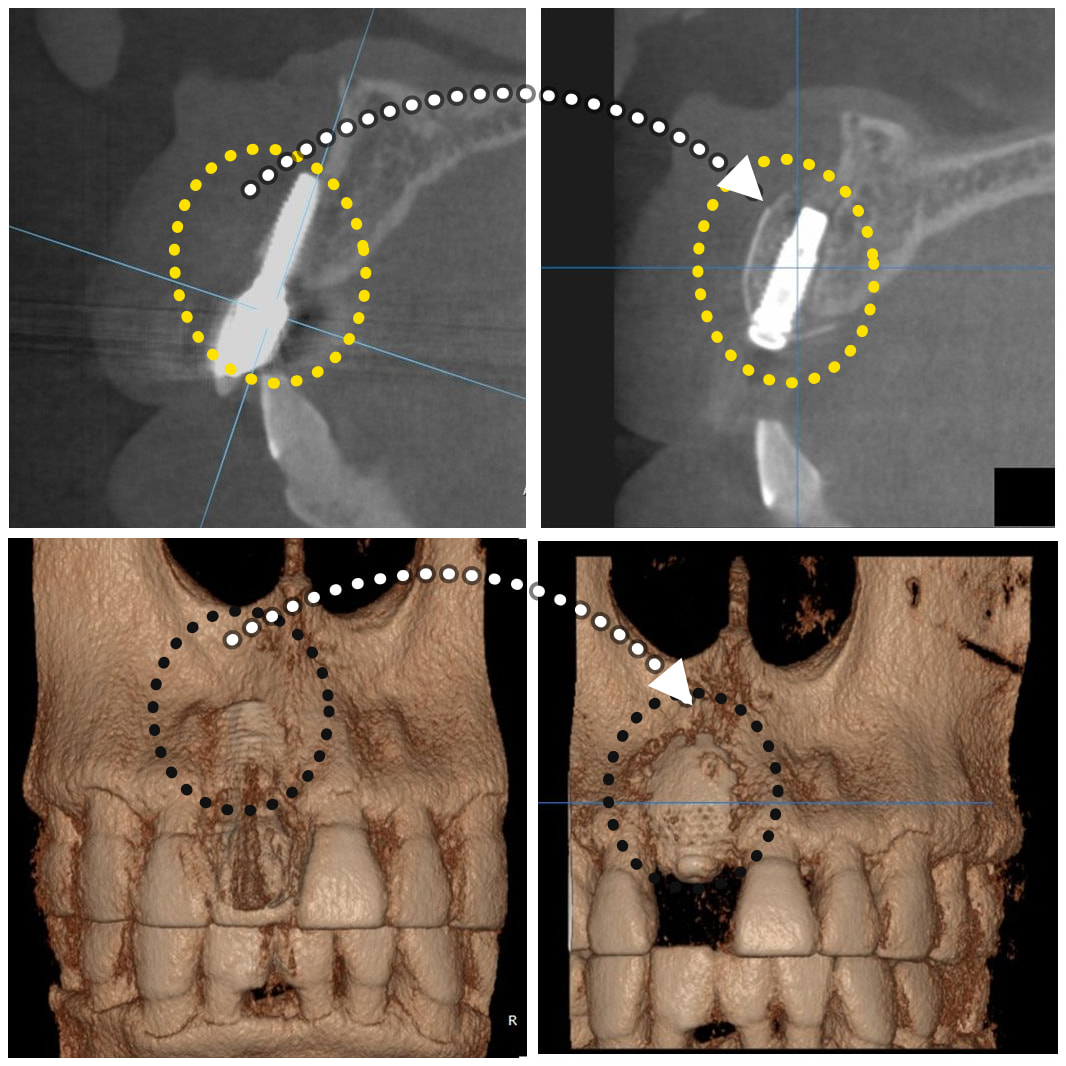
CBCT of the same implant — sagittal section (top) and 3D reconstruction (bottom)
Drive with an implant motor
The NiTi Brush must be driven by an implant motor through a 20:1 reduction handpiece at 600–1,200 rpm, with continuous external sterile saline irrigation. It is not intended for a high-speed turbine or any drive that cannot hold this speed range.
Non-sterile · single use
Supplied non-sterile — autoclave at 134 °C for 15 minutes before every use. Single use only, do not reuse. This page is an example protocol and does not replace the Instructions for Use; always read the IFU applicable to your market before treatment.